Holding our own…
Three words from a sinking ship. By the time they were spoken, it was already too late. This page is why we say them — and why we mean them as a warning, not a boast.
The lake was the wrong color
before the wind even arrived.
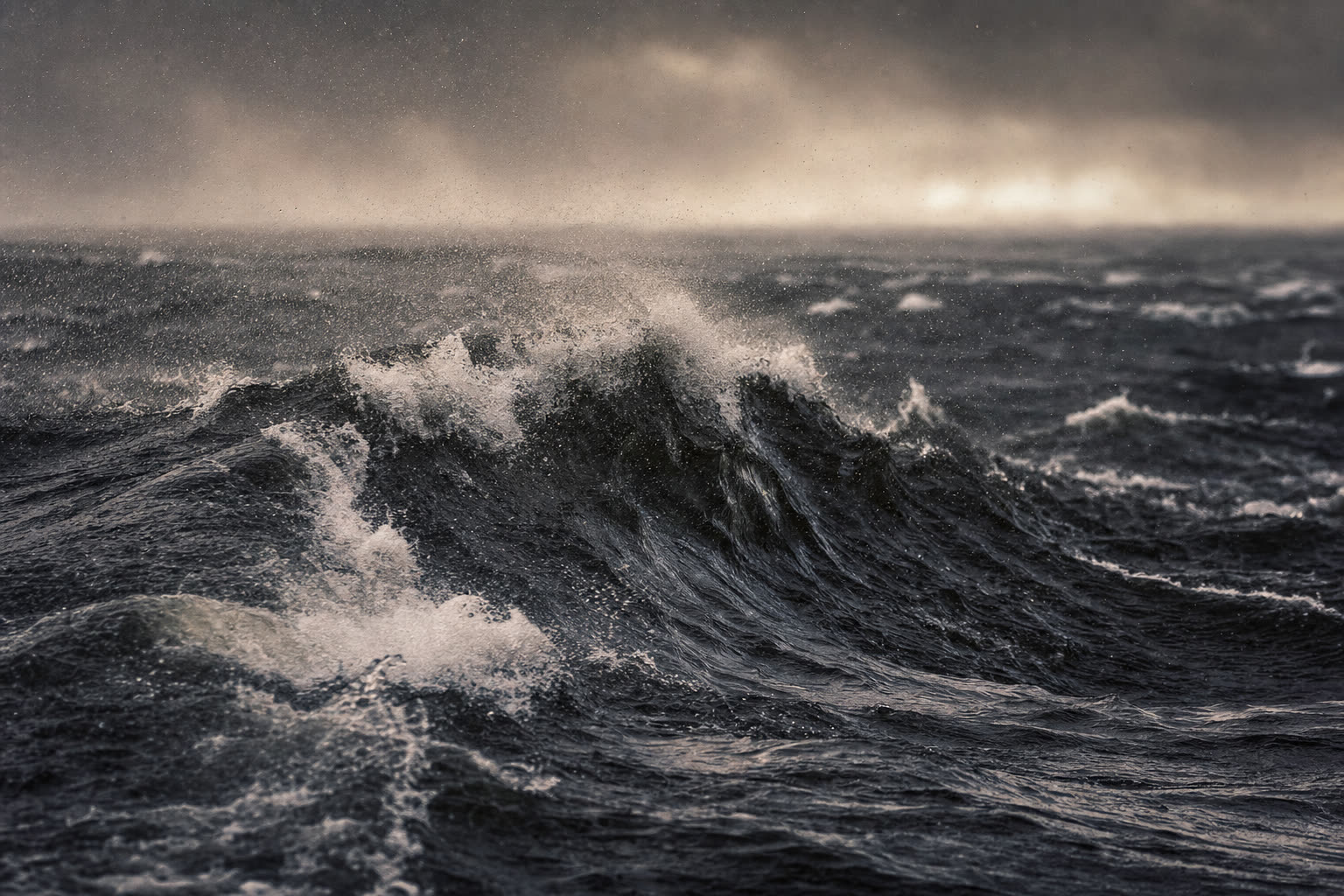
November on Lake Superior has a reputation it earns honestly. The wind builds for days before anyone calls it weather. By the time the freighters were running for shelter that afternoon, the seas were already over twenty feet and climbing. Snow squalls swallowed the radar returns. The lake had stopped being a lake and started being a sea — black, indifferent, the kind of water that does not care who you are or what you've already survived.
"We are holding
our own."
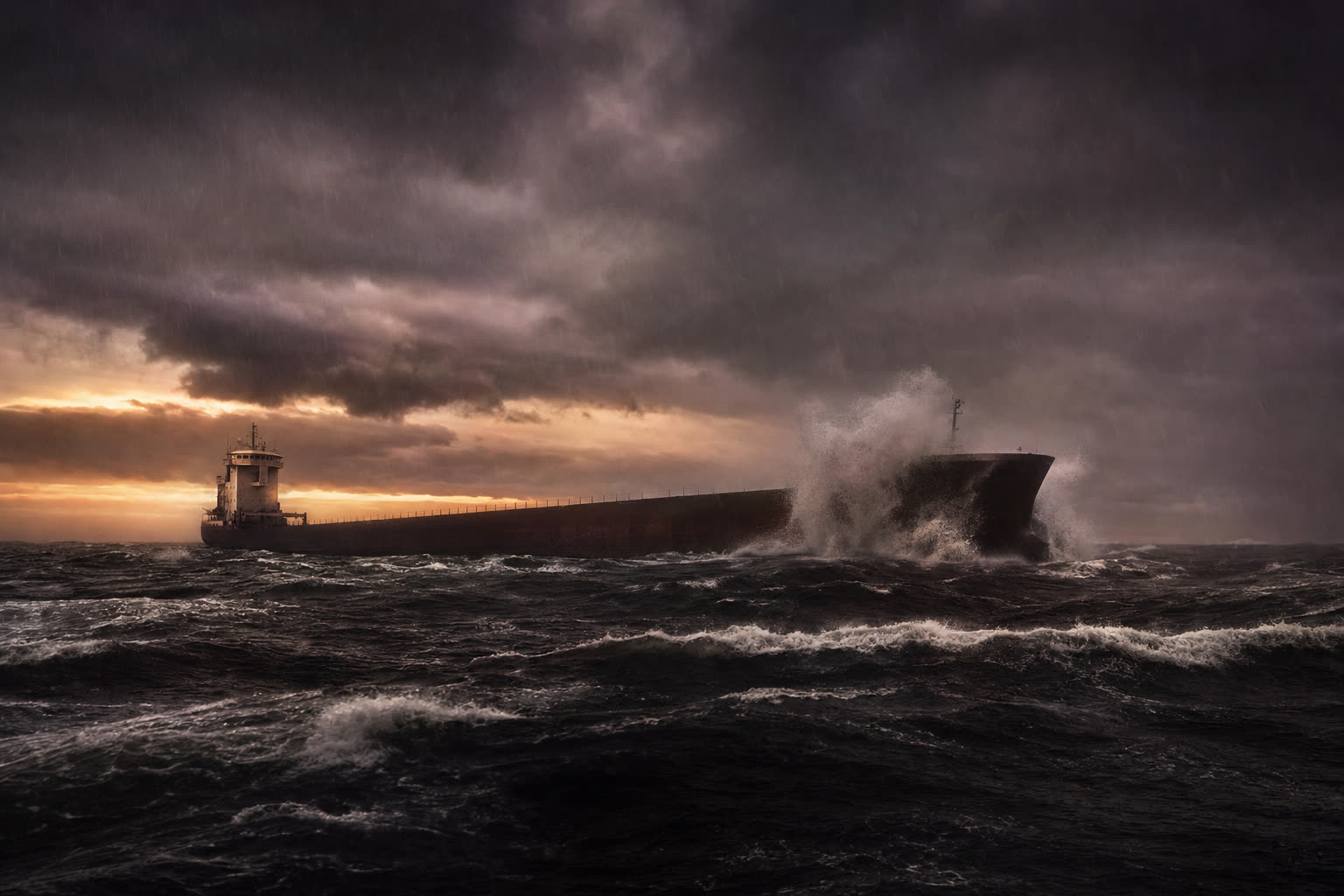
The Edmund Fitzgerald was the largest ore carrier on the Great Lakes when she launched. Seven hundred and twenty-nine feet long. The pride of the fleet. Captain Ernest McSorley was one of the most respected masters on the lakes — thirty-five years on the water, a man other captains called for a second opinion. The kind of professional who did not exaggerate, did not panic, and did not ask for help unless he was sure he needed it.
Late that afternoon, the Fitzgerald took on a list. She had lost two vent covers and both her radars. She was riding lower than she should have been. The SS Arthur M. Anderson, running about ten miles behind her, kept her on radar and on the radio. Captain Bernie Cooper of the Anderson asked McSorley how he was making out with his problems.
"We are holding our own."
That was the last transmission anyone ever received from the Edmund Fitzgerald. Sometime in the next ten minutes, in a snow squall on the eastern end of Lake Superior, she disappeared from the Anderson's radar. All twenty-nine men aboard were lost. The wreck sits in five hundred and thirty feet of cold water, still loaded, still upright in two pieces. No bodies were ever recovered.
He sounded fine.
That was the problem.
Read the transcripts. McSorley does not sound afraid. He does not sound desperate. He sounds like a captain managing his ship. We are holding our own. A professional answer from a professional man on the worst night of his career. And ten minutes later, the radio went quiet, and the radar went empty, and there was nothing the Anderson could do but turn around and look.
That is the part of the story that should keep you up at night. Not the storm. Not the wave that finally took her. The five words. The calm in the voice. The fact that by the time a serious man tells you he is holding his own, the gap between where he is and where the bottom is may already be measured in minutes.
Help, if it had any chance at all, needed to leave port hours earlier. By the final transmission, there was no help that could close the distance in time. The cautionary tale is not he should have called Mayday at the end. The cautionary tale is by the end, Mayday was no longer a tool that worked.
We have heard this radio call before.
The quiet professional does not transmit in plain language. They never did. They were not trained to. The job rewarded people who could carry a load without letting on. That habit does not turn off when the boots come off.
A team leader sits across from a buddy at the kitchen table. The buddy asks how things are going. The team leader says I'm good. The team leader is not good. The team leader is three months past separation, four months behind on something they will not name, and one decision away from a quiet exit nobody on the team will see coming. I'm good is the radio check. It is the answer a professional gives. It is the answer the team has trained them to give.
A captain runs a third call before sunrise. A pediatric arrest. They are back in the rig before the family has been told. The lieutenant asks if they're alright. The captain says yeah, I'm holding my own. They mean it the way they were taught to mean it — that they are still functioning, still on the watch, still able to run the next call. They do not mean I am okay. Those are different sentences. The lieutenant does not always know that.
A spouse asks an operator how the job hunt is going. The operator says holding our own. They are not holding their own. They are eight months into a market that does not speak their language, two months from the savings running thin, and one tough conversation away from a future they could still build if they let someone help. The conversation does not happen. The savings run out. The future gets smaller. None of it had to.
Every one of these calls is a version of McSorley on the radio. Calm. Professional. Accurate, in the only language the speaker has been given to use. And every one of them is a transmission that needs to be translated by someone close enough to hear it — before the next squall closes the window for good.
Help works upstream of the wave.
The lesson of the Fitzgerald is not that the crew failed. It is that the window for help is almost never the window we think it is. By the time someone says we are holding our own, the call that would have changed the ending needed to have already been made — hours, days, sometimes years earlier.
This is the entire reason SVEGF exists upstream of the crisis. We do not wait for the Mayday. We invest while the operator, the veteran, the responder, the neighbor still has momentum. We give them the means before the storm peaks, because a grant placed early is worth more than any rescue placed late.
We're holding our own…
Together.
The motto stays. The ellipsis stays. The cautionary tale stays. But the answer to the cautionary tale is the word we have added on the end. Together is the only honest finish to the sentence. It is the team room, the firehouse, the neighbor on the porch, the foundation behind them. It is the radio call returned before the squall closes in.
If you are reading this and you recognize your own voice on the radio — make the call now. Not at the end. Now, while there is still water under the keel and time on the clock. We are here. We will translate. We will not leave you on the lake.