Process Optimization · Kaizen
In SOF, every minute on a target is rehearsed, debriefed, and shaved tighter. In business, that's called continuous improvement. Operators don't have to be taught it — they have to be told it has a Japanese name.
What follows is not a brochure. It is a walk through the rooms our teams worked in, the equipment that came home in worse shape than the operators did, and the silence that arrived with them. We owe you this before we ask you for a dollar.
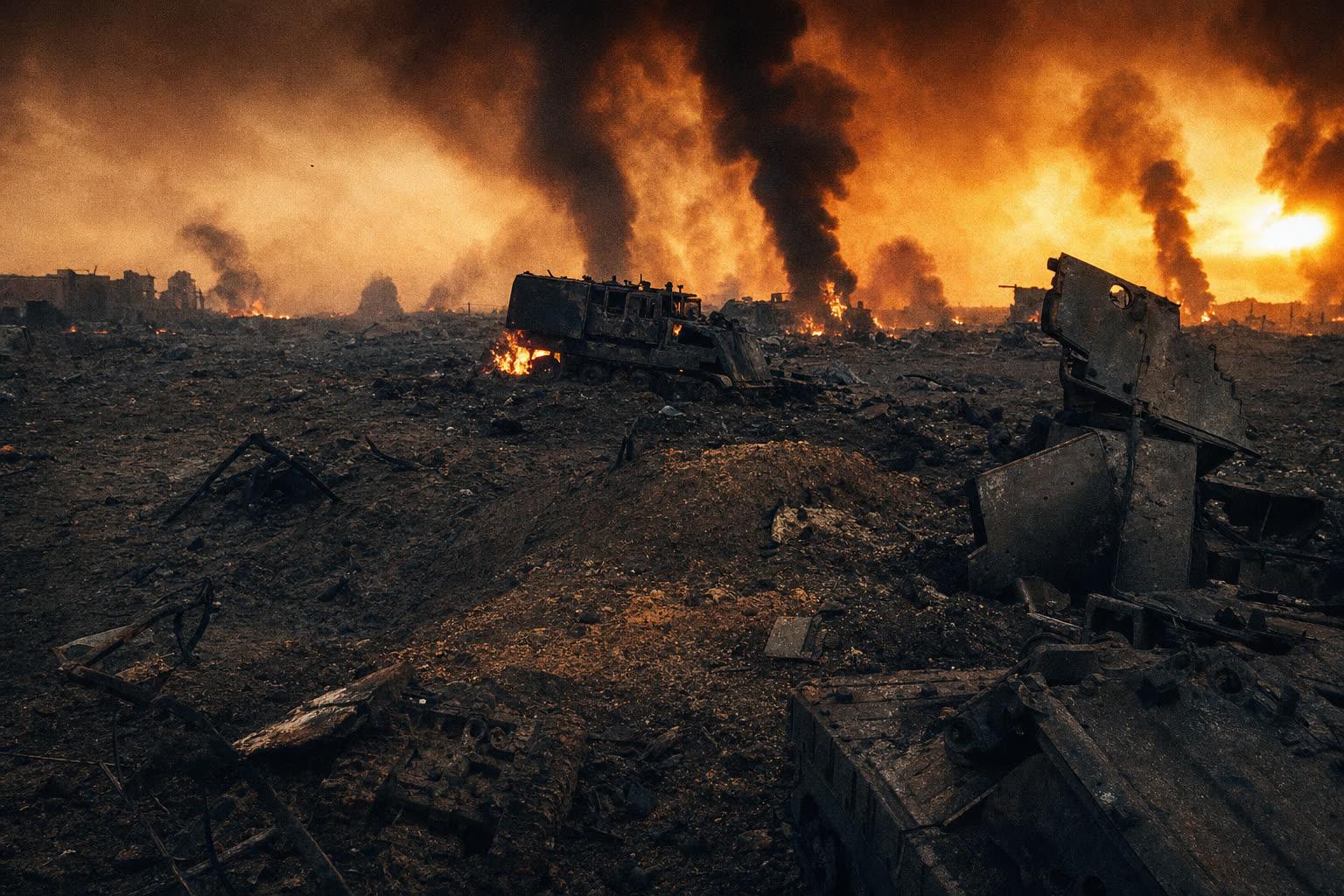
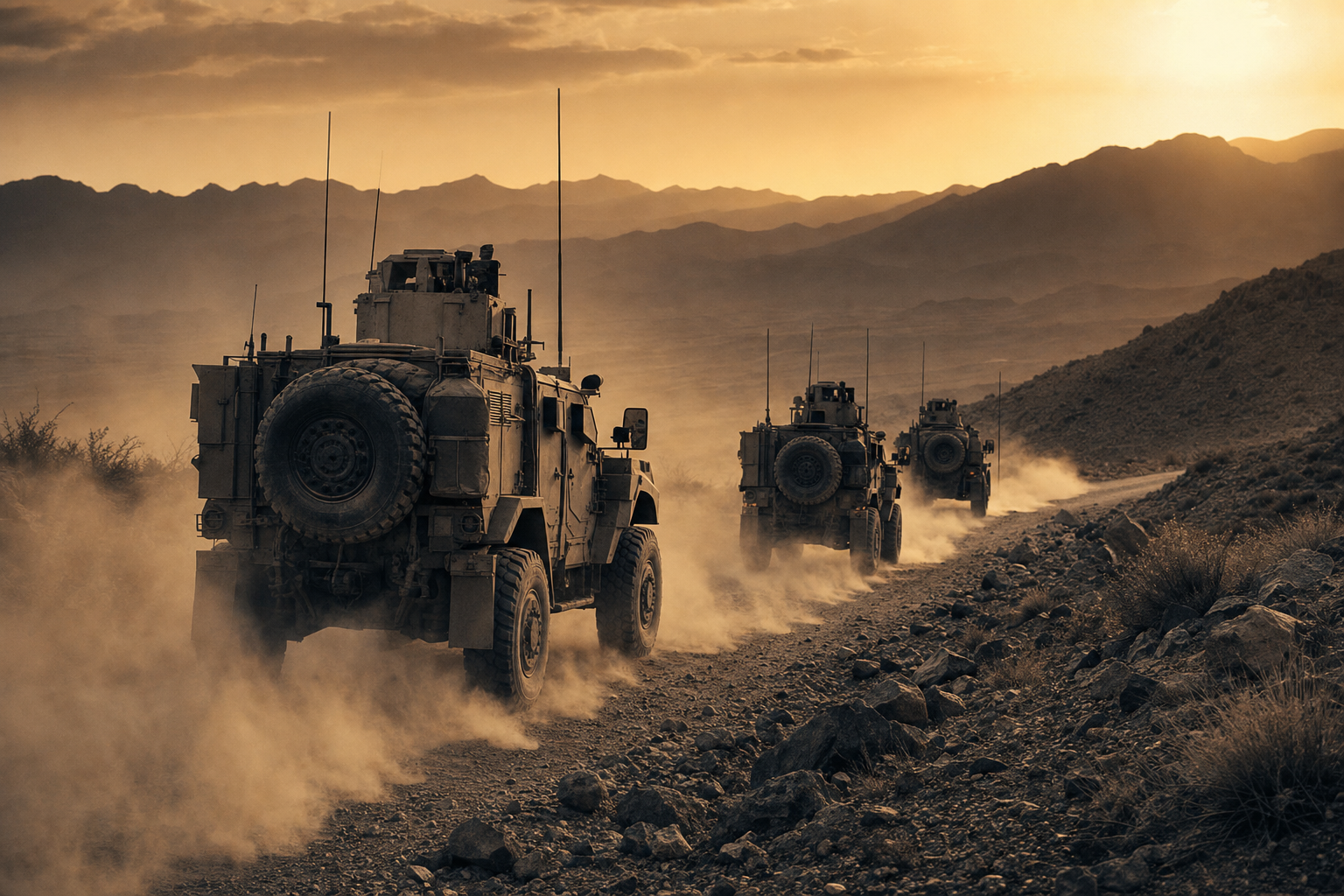
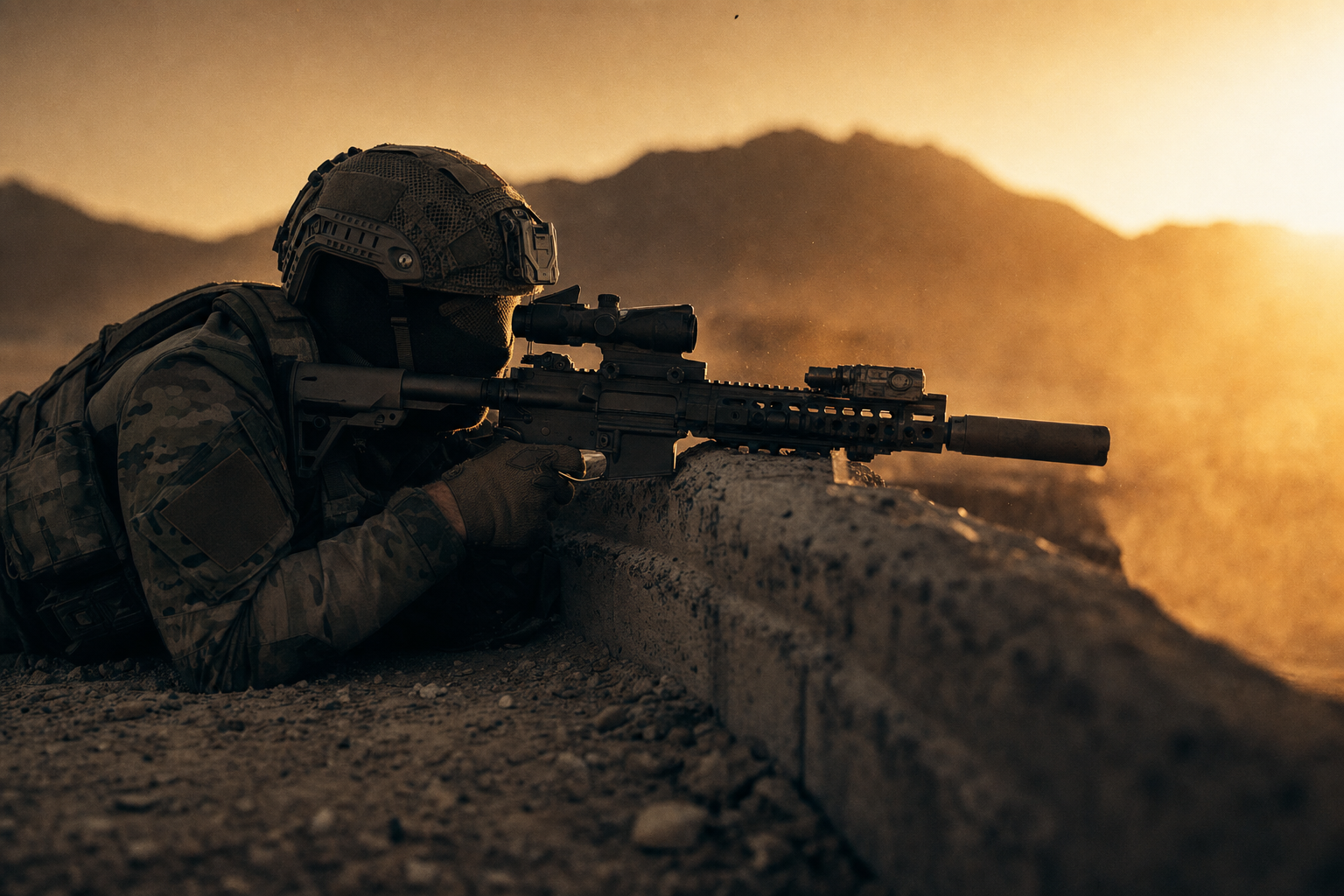
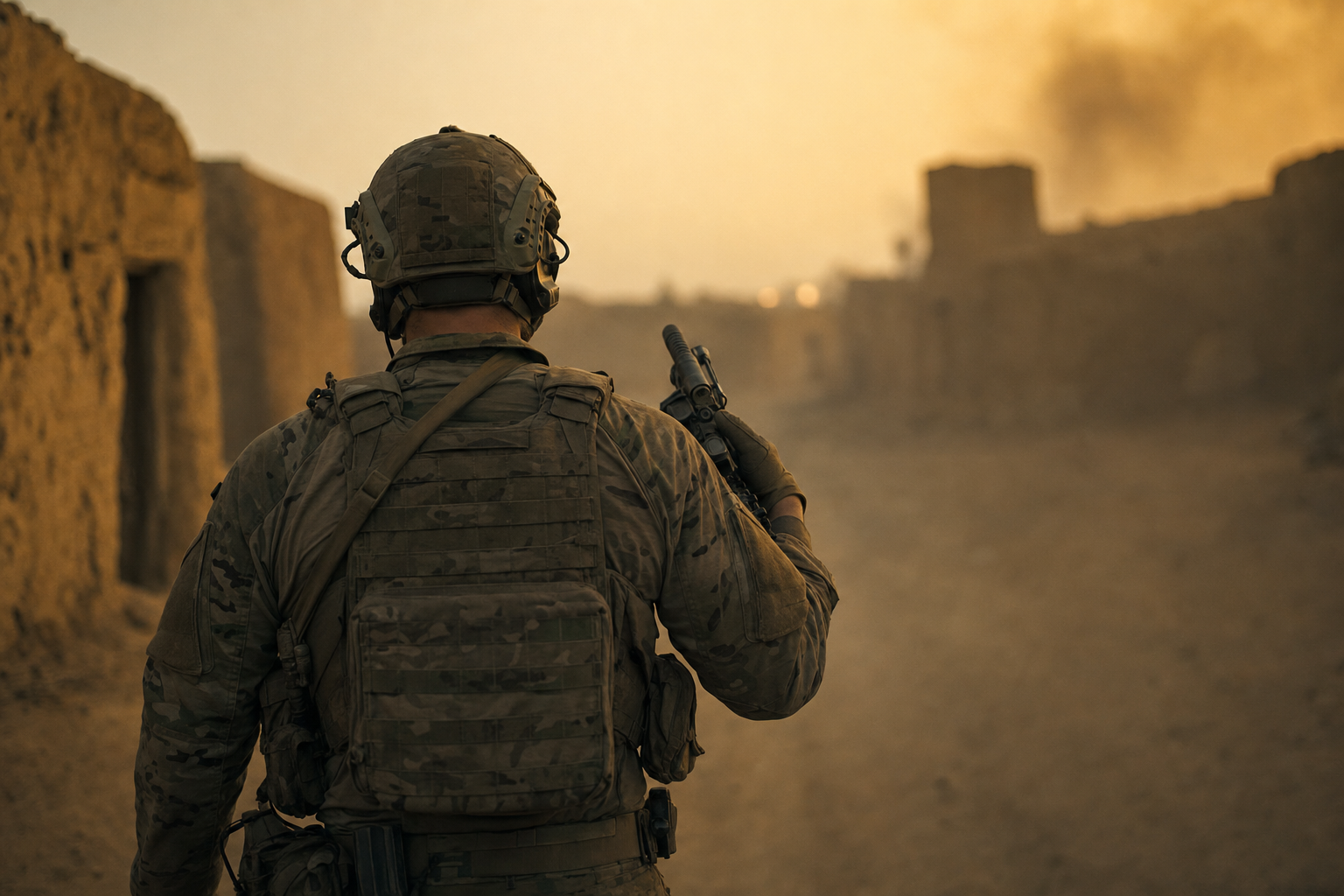
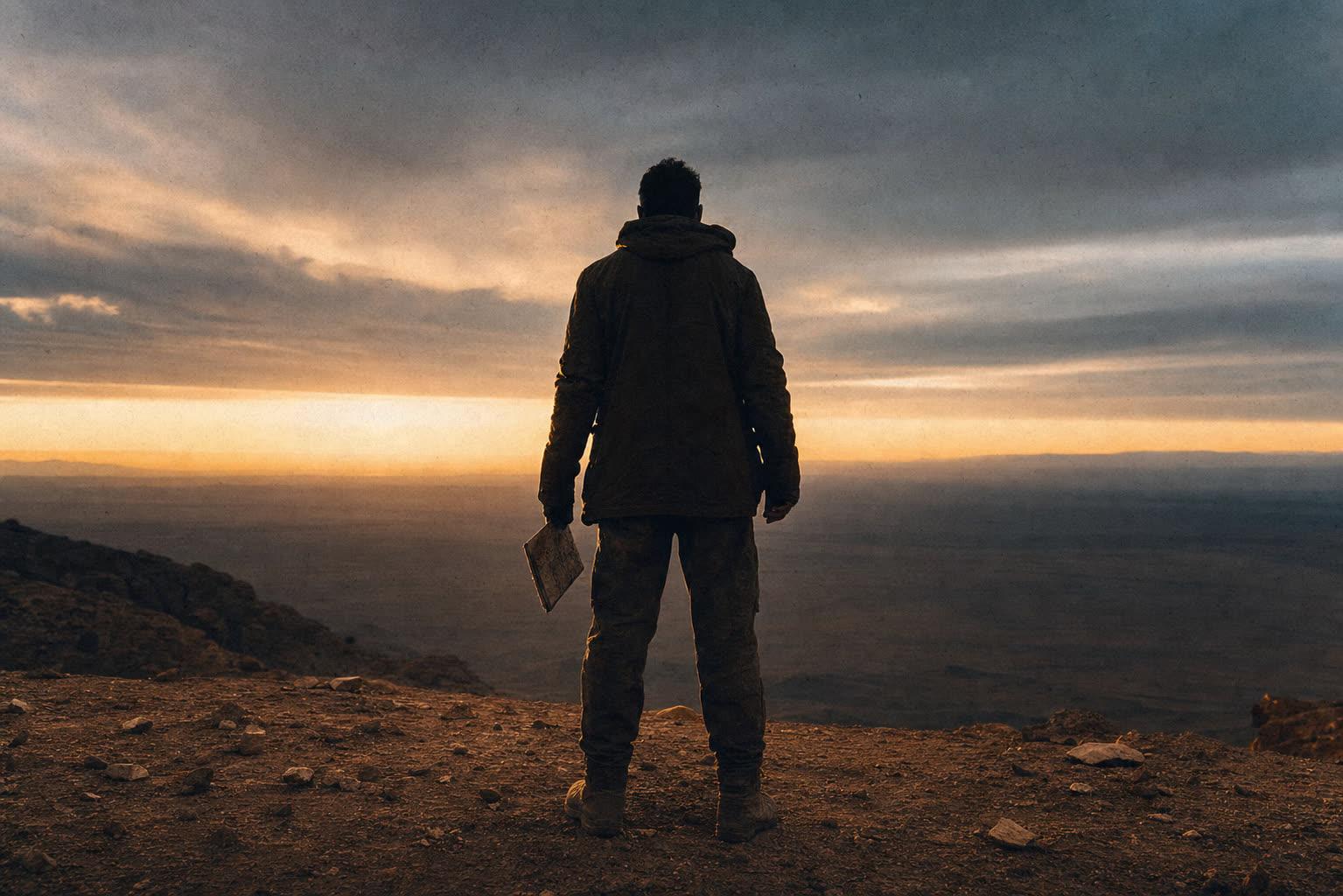
Most of the country was asleep. Our teams were already moving — through a village whose name nobody at home would ever learn to pronounce, toward a door that someone on the other side of the world had decided needed to be opened tonight. The room beyond that door is the room they worked in for twenty years. Smoke that didn't lift. Decisions measured in seconds. A radio crackling with three different languages at once. They didn't pick this room. They walked into it so someone else wouldn't have to.
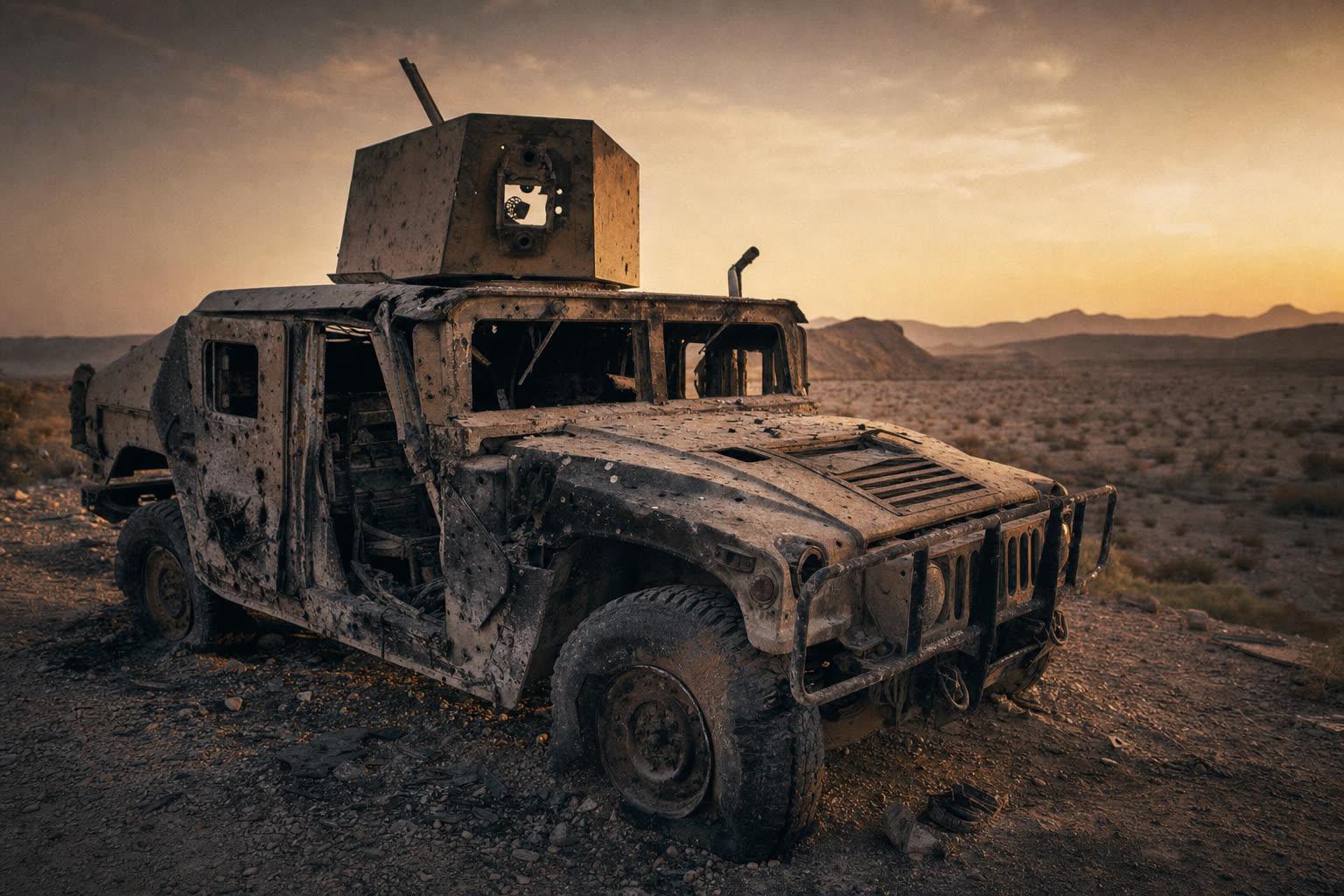
Look at the hood. Each pock is a moment a parent almost didn't come home to their kids again. Each scorched panel is a story a team sergeant has not told their spouse, will not tell their spouse, may one day tell another operator at three in the morning in a kitchen in Fayetteville. The truck came home on a flatbed. The team — the ones who came home — came home carrying the truck with them, somewhere quieter, somewhere harder to point to.
Most veteran content is sanitized for donors. We refuse. The service members we serve already lived through it; the least we can do is not lie about it on a website.
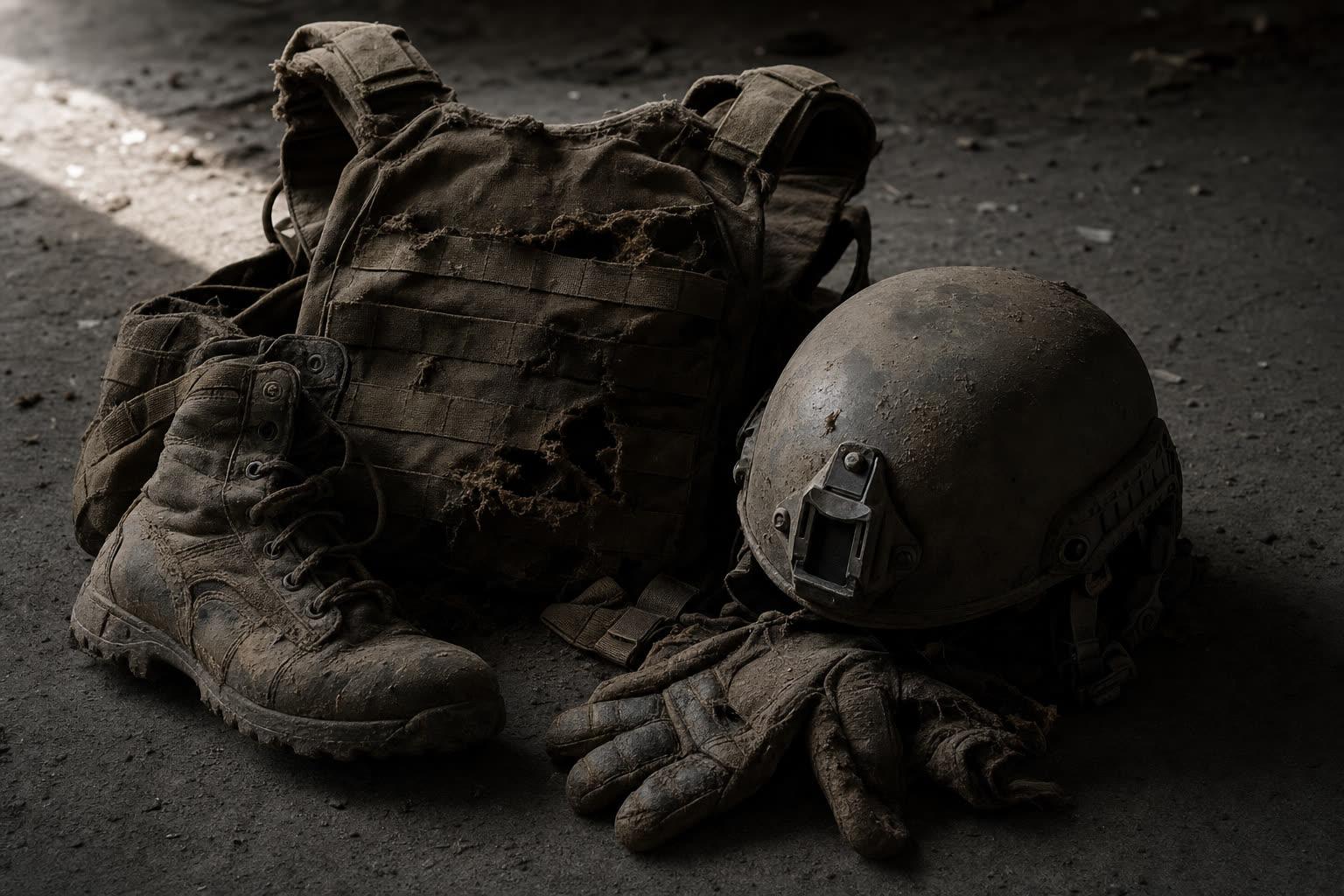
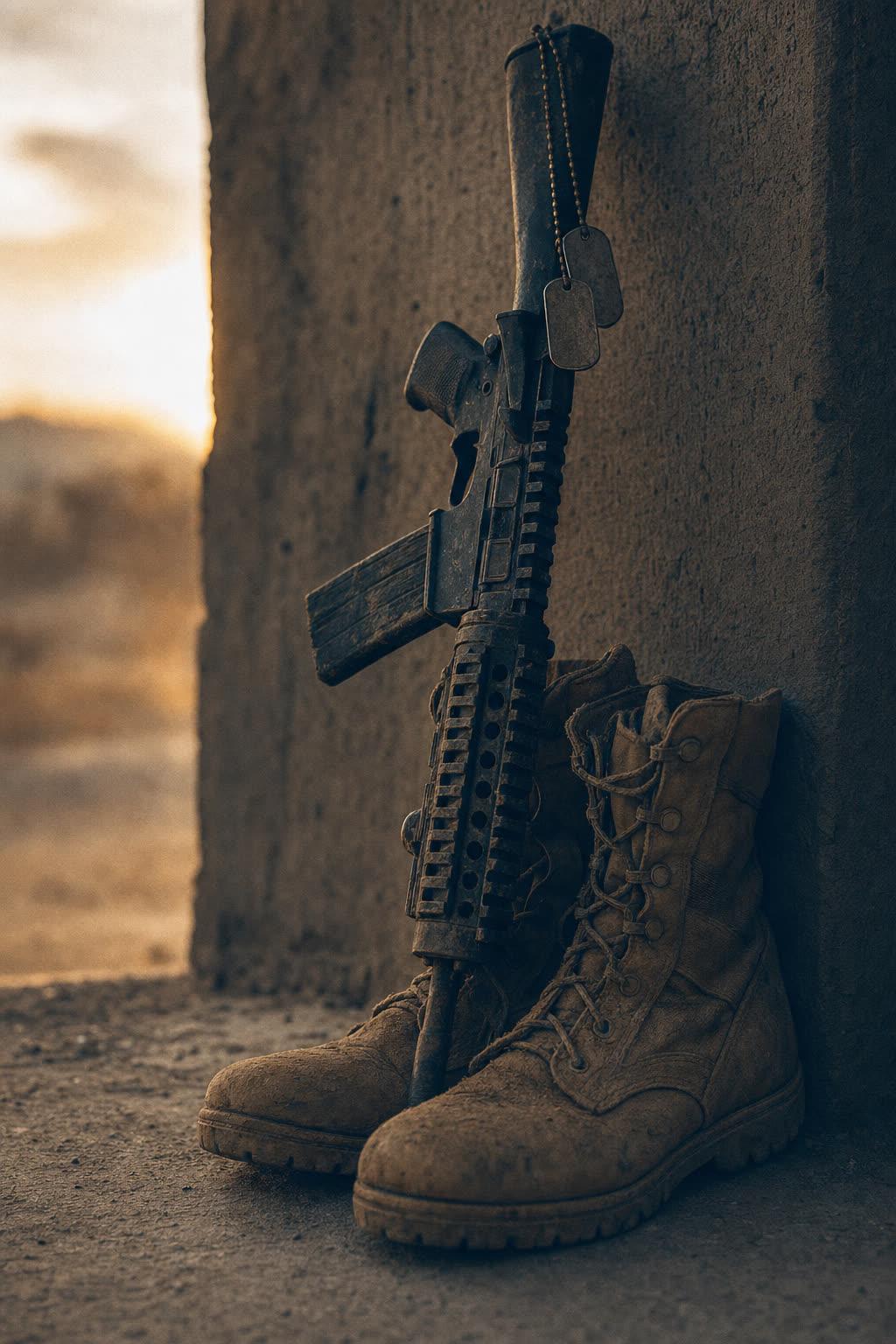
They drove the rifle into the ground muzzle-first. They set the boots in front of it the way the fallen set them every night beside the cot. They hung the tags from the pistol grip. Nobody read a poem. Nobody had to. The whole team walked past it in single file before chow and again before mission prep, and that was the funeral until the real one happened later in a town none of them could attend.
This Foundation exists because they didn't come home to start the company they used to talk about on the long drives. Every grant we write carries their name and the names of the others, whether we say so on the wire transfer or not.
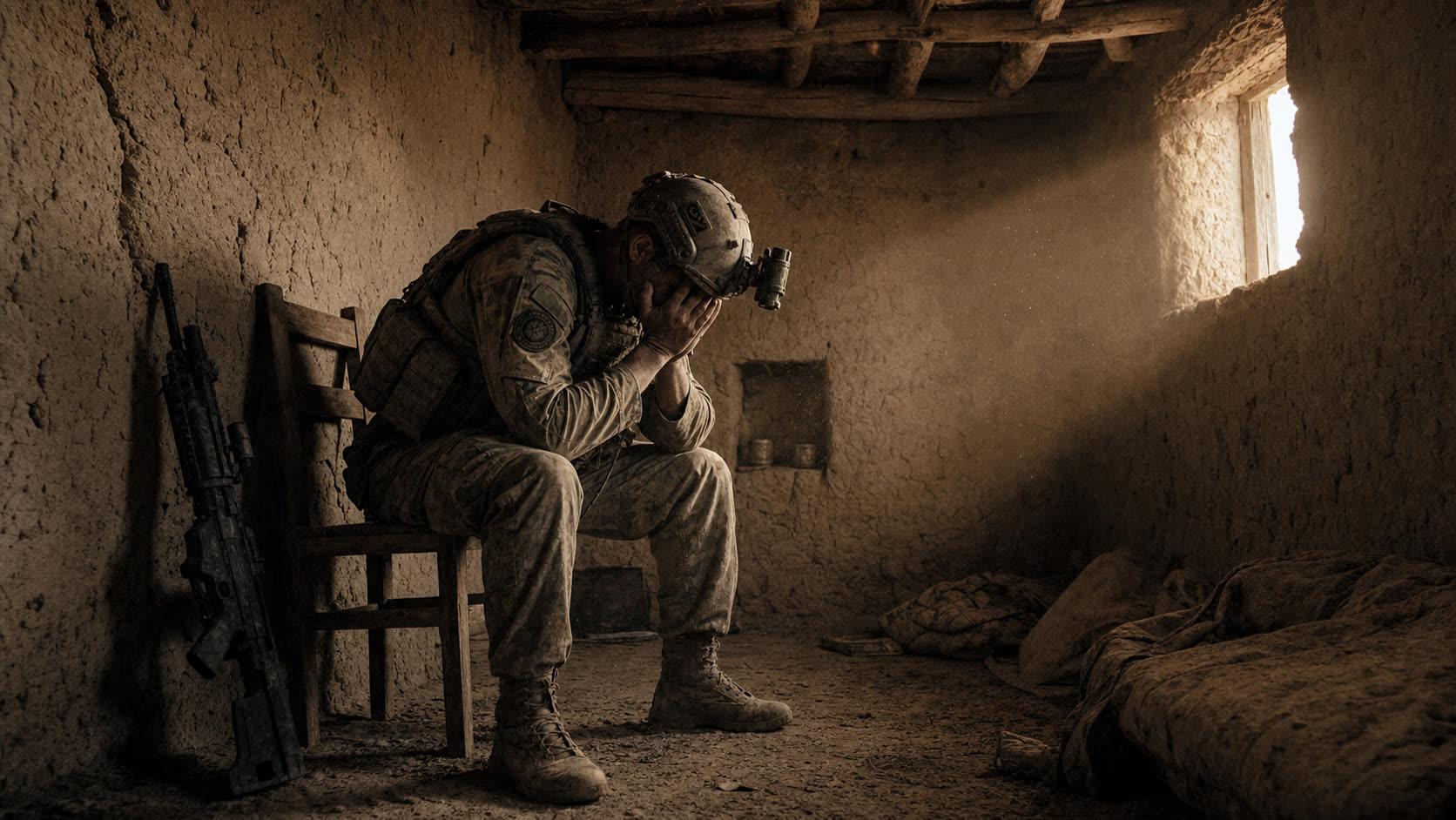
The hut belonged to someone whose name the operator would never learn. The chair was wooden and a little too short. The NODs were still on the helmet because there hadn't been a window of stillness long enough to bother. The rifle went against the far wall the way you set a sleeping child down — gently, so it doesn't wake up. And then both hands went up to a face and stayed there, and for the first time since the brief two days ago, they let themselves feel the weight of every decision they'd just made on behalf of other people.
That weight does not get left in the hut. It comes home in the carry-on. It sits down at the kitchen table in Michigan. It is still there at the school pickup line, in the line at Costco, in the quiet after the kids go to bed. SVEGF exists so the same focus that got that operator through that night gets pointed at a business they can build for the next thirty years.
It's a Tuesday morning in a subdivision outside Detroit. The uniform is folded in a plastic bin in the basement next to the Christmas decorations. The team is scattered across four time zones — one is selling insurance, two are not answering their phones this month, one of them is gone. Nobody is calling. The phone is quiet in a way that wasn't quiet before. The spouse is at work. The kids are at school. The veteran pours coffee at 9:14 AM and the cup is heavier than the rifle ever was, and the question that opens in their chest is — what now?
For most operators, that question lands harder than any deployment ever did. SVEGF exists for that morning.
A SOF veteran has already built — under fire, with strangers, against a deadline that does not negotiate. The skill set that kept them and their team alive is the same skill set that builds a profitable, durable business.
In SOF, every minute on a target is rehearsed, debriefed, and shaved tighter. In business, that's called continuous improvement. Operators don't have to be taught it — they have to be told it has a Japanese name.
The AAR is the most valuable management tool no MBA program teaches well. What was supposed to happen? What actually happened? Why? What do we do differently next time? Operators run them on autopilot.
A standard operating procedure that survives contact with reality is a hard thing to write. SOF writes them, breaks them, rewrites them, and trains on them — and the company that can do that scales.
A 12-man team is a system. A target package is a system. A supply chain is a system. Operators think in dependencies, single points of failure, and redundancy — the exact mental model every founder needs.
SOF doesn't roll into a region without learning the elders, the markets, the language, and the unwritten rules. The same instinct lands a sales call in a city you've never lived in. It's not a soft skill. It's a weapon.
A team sergeant has worked in environments where the local economy was the security situation. That literacy — how money actually moves through a community — is uncommonly rare among MBAs and uncommonly common in SOF.
A young NCO has led service members older than them with lives on the line in the dark, with no signal, in someone else's language. A first-time founder leading a six-person company is, by comparison, a calm Tuesday.
SOF selection filters for one cognitive trait above all others — the unshakeable belief that the next problem is, in fact, solvable. The same trait makes a founder pick the phone up on day 481 when the round-up looks ugly.
SOF careers are built on never being satisfied with last quarter's standard. Every shooting package, every fitness number, every brief — better than last time. That is the engine of a compounding business.
We're not against business school. Several of our advisors hold MBAs. But if you're picking who to bet on with a non-dilutive grant, here is the honest comparison:
The civilian world spends two years and six figures simulating what these service members did in their twenties. The grant we give isn't charity. It's recognition that the most expensive training program in human history has already been completed — and is sitting on the bench unused.
The operator coming home is one cost. The neighbor who never had the option to leave in the first place is another — and the math runs in the same column. A kid in a Detroit zip code with a sharper mind than ninety percent of the room they will never be invited into. A single parent working two jobs whose business plan has been written on the back of grocery receipts for three years because no bank in this city will return their call. A first responder living four blocks from the engine house, raising kids on a salary that did not survive the last decade.
These are people who answered a call too. Different uniform, sometimes no uniform. Same watch. Same load. And the cost of leaving their talent on the bench is paid by the entire community around them — in shuttered storefronts, in vacant lots that should have been workshops, in dreams that get smaller every year they go unfunded until they stop being dreams and start being regrets.
The cautionary tale of the Edmund Fitzgerald doesn't only sail on Lake Superior. It runs through every neighborhood where serious people, doing serious work, are holding their own in the loneliest sense of the phrase. We hear that radio call here too. We are answering it here too.
Read “Holding Our Own”Every Michigan veteran, every first responder, and every operator in an underserved community has run their own version of the same training program. They built under load. They led without resources. They debriefed honestly. SVEGF starts with SOF because that's where we have line-of-sight — and we widen the tide from there.
See the Rising Tide thesisEvery dollar moves into entrepreneurship grants, mentorship, and reactivation missions. We are lean, accountable, operator-led, and a 501(c)(3) veterans nonprofit.